
Stages of Gum Disease
November 14, 2026 9:00 amA little blood on the floss can be easy to dismiss, particularly when your gums do not hurt. You may brush more carefully for a few days, then forget about it once the bleeding seems less noticeable. However, gum disease can progress beneath the surface, and the treatment changes once the tissues and bone supporting the teeth are affected.
At Vero Dental in Denver, Colorado, Dr. Giuseffi, Dr. O’Brien, and our team check your gums along with your teeth. We offer periodontal therapy, including deep cleaning when buildup has collected below the gumline. If your gums are bleeding or food keeps catching in a new spot, we can check what has changed and explain the care needed.
Early Gum Disease and Bleeding Gums
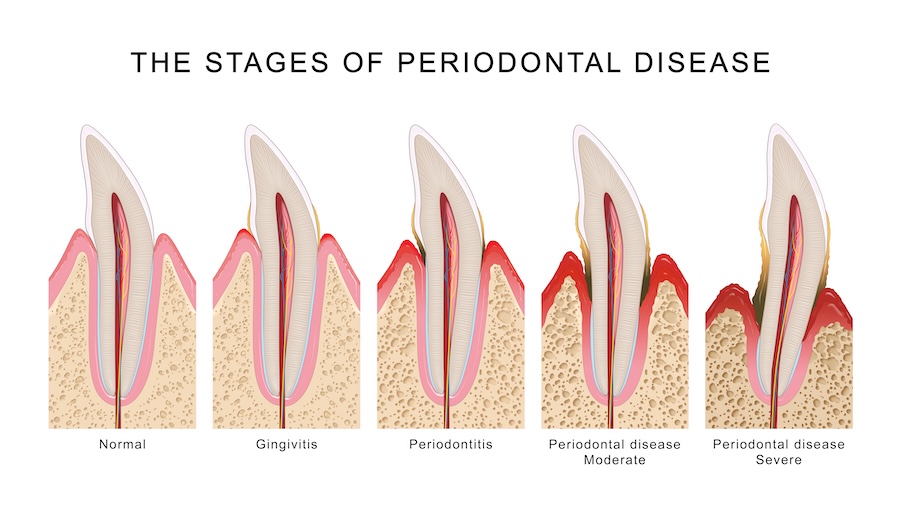
In its earliest form, called gingivitis, gum disease affects the gums around the teeth. Plaque along the gumline irritates the tissue, which can become red, puffy, or prone to bleeding. You may notice blood when flossing even though chewing and brushing feel comfortable.
At this point, professional cleaning and more consistent plaque removal at home can often reverse the inflammation. We remove the buildup you cannot brush away, then help you reach areas you may be missing. If floss is awkward behind a back tooth or around a crown, we can show you a technique or cleaning aid that fits that space.
Gum Disease Below the Gumline
If the inflammation progresses to periodontitis, the attachment between gums and teeth can break down. Deeper pockets form around the roots, leaving room for bacteria and tartar beneath the gums. Over time, bone support can be lost as well, even when there is very little pain.
You might notice a tooth looking longer, bad breath that keeps returning, or more food getting trapped between teeth. Because those changes can happen gradually, we measure the gums and review X-rays when needed. We can then explain whether the problem is limited to inflammation or has affected the structures holding a tooth in place.
Loose Teeth and Changes in Your Bite
With more advanced support loss, a tooth can loosen or drift enough that a new gap appears. You may start chewing on the other side because one area feels less steady. Some people also notice that their teeth no longer meet quite the same way when they close.
If a tooth starts feeling loose or your bite changes, call us so we can check it. We’ll look at the support around the tooth and explain what might help it feel steadier when you chew. If you need more involved gum treatment or a specialist visit, we can go over that with you after the exam.
Why Your Gums May Need Extra Care
If you brush every day and still see blood on the floss, bring that up when you come in. We can check for buildup below the gums and whether crowded teeth or an old crown make a spot difficult to clean. We’ll also ask about dry mouth, smoking, medicines, and any gum disease in your family, since these can affect what your gums need.
For example, if a medicine leaves your mouth dry, we can discuss ways to protect your teeth and gums. If you have diabetes, knowing how it is being managed helps us plan your care. You can also bring the cleaning aids you use or describe where you struggle to reach, and we can work through those spots with you.
Deep Cleaning for Gum Disease
If periodontitis has left buildup around the roots, a routine cleaning may not reach all the affected surfaces. At Vero Dental, we can use scaling and root planing, often called a deep cleaning, to remove that plaque and tartar. We numb the areas as needed and explain how treatment will be divided into visits before starting.
Afterward, your gums may be tender and your teeth may react to cold while inflammation settles. We provide instructions for cleaning and eating, then check how the tissues respond. If pockets remain deep or keep bleeding, we’ll explain whether further treatment is needed.
Care After Gum Disease Treatment
Once gum disease has affected the support around a tooth, we need to keep checking that area even after the bleeding settles. You may hear us call those visits periodontal maintenance, and we may recommend them more often than your old cleaning schedule. We clean around the roots and check for changes before they leave you with another loose or sore tooth.
Between visits, brush with fluoride toothpaste and clean between your teeth daily. If one spot still bleeds or catches food despite your efforts, bring it up so we can check it. You may need a different cleaning approach or treatment for a local problem around the tooth.
Gum Disease Care at Vero Dental
If your gums keep bleeding, a tooth feels loose, or a new gap has appeared, come see our Vero Dental team. We can explain what is happening around your teeth and recommend treatment that fits the condition of your gums. Schedule a visit in Denver, Colorado, and let us help you get those troublesome areas checked before more support is lost!
Categorized in: Gum Health